I didn't go in with a fixed plan. I wanted to understand what people are actually building with AI right now — beyond tutorials and small projects.
Most of what we see online is still very demo-focused. I was curious to see how things look in real-world environments. The venue was busy from the start — registrations, people moving between halls, multiple sessions running in parallel. Two tracks ran simultaneously throughout, which meant constantly choosing what to attend and what to skip.
One thing became clear early: the sessions weren't about explaining what AI is. They were centered on practical implementation — what works, what doesn't, and what challenges teams face after deployment.
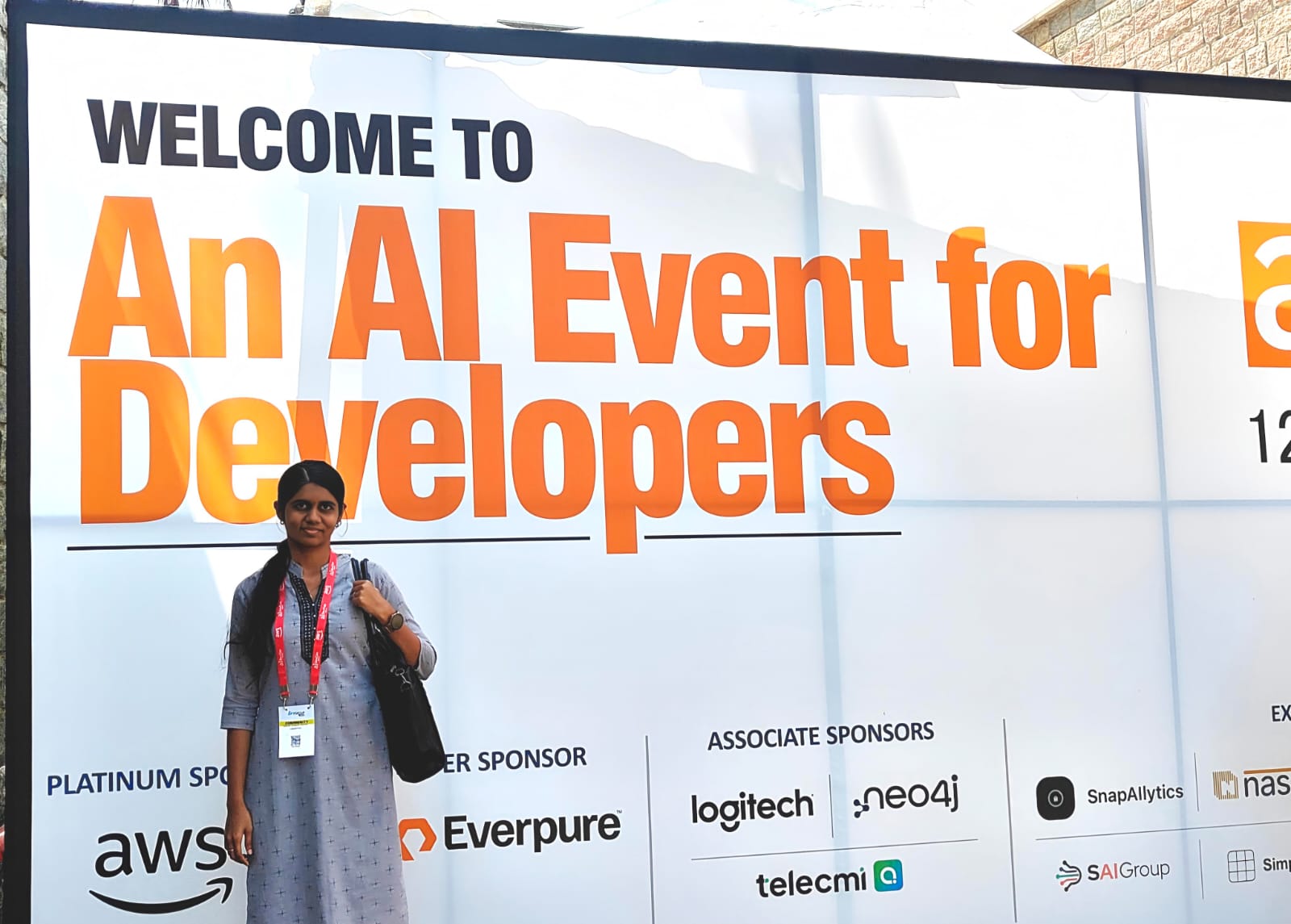
Building AI that survives production
Multiple talks focused on enterprise-ready AI systems. The emphasis wasn't just on models — it was on everything surrounding them. The message was consistent: building a model is one part of the process. Making it run reliably is the rest.
A dedicated session broke down the distance between something working locally and something that can handle real users — latency, reliability, cost, and debugging. Rarely covered in online courses.
- Data pipelines
- Monitoring & debugging
- Scaling infrastructure
- Compliance & accountability
There was also a session on AI regulations and compliance — different from the technical talks but genuinely useful. It covered data privacy, legal considerations, and accountability. A reminder that AI development is no longer just a technical problem.
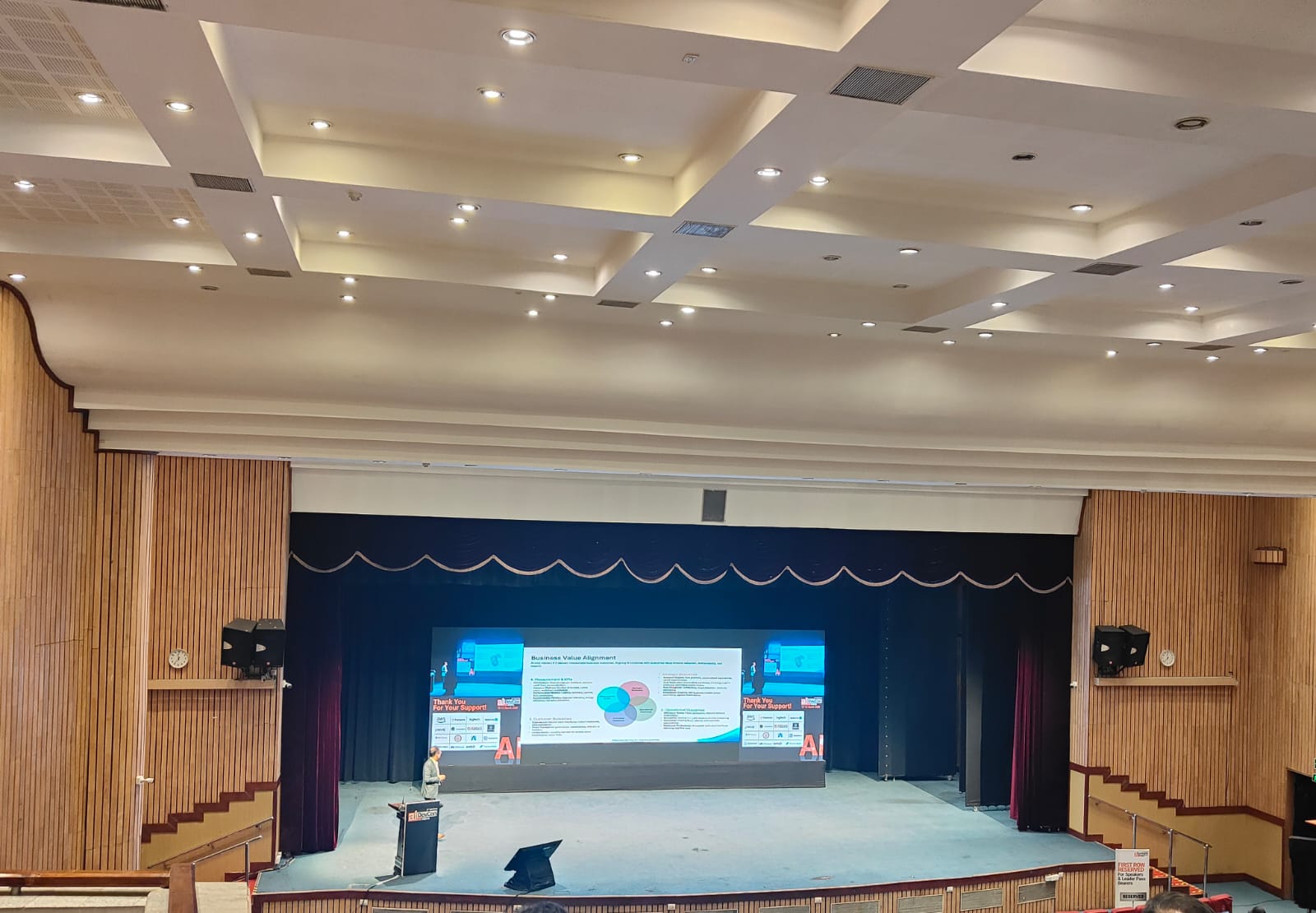
Agentic AI — everywhere, and still difficult
Across both days, one topic surfaced repeatedly. Not just in one session, but woven through talks on different subjects entirely.
Companies are actively experimenting with agents — and equally candid about what isn't working yet.
Automating the diagnosis of production failures — not just flagging them, but tracing them.
Agents embedded into CI/CD pipelines handling decisions that previously needed human input.
Multiple agents coordinating — the coordination itself being a significant unsolved problem.
Guardrails, output control, and what to do when agents don't behave as expected.
What made these sessions useful was the balance. It wasn't just about what's possible — speakers also shared where things still break. A more honest view than typical conference talks.
AI in DevOps and security
The second half of Day 1 moved into territory that's rarely covered in beginner-level AI content — DevOps and security. Topics that typically live in separate conversations started showing up together.
- Zero-trust identity
- AI-based threat modeling
- Vulnerability detection
- AI in infrastructure debugging
- Anomaly detection at scale
- Automated incident response
Seeing AI integrated into these systems — not as a standalone layer but embedded into existing workflows — was a different angle from what most AI learning tracks cover.
Open-source, data pipelines, and LLM architecture
Day 2 expanded into areas that often get less attention: how the data feeding into systems matters as much as the systems themselves.
Caching strategies and architectural decisions that meaningfully reduce inference costs at scale — a practical concern most teams hit quickly.
Better pipelines, cleaner data — the consistent message was that data quality has a larger effect on output than model choice, in many cases.
This reinforced a theme that appeared throughout the event: data isn't just an input. It's a lever.
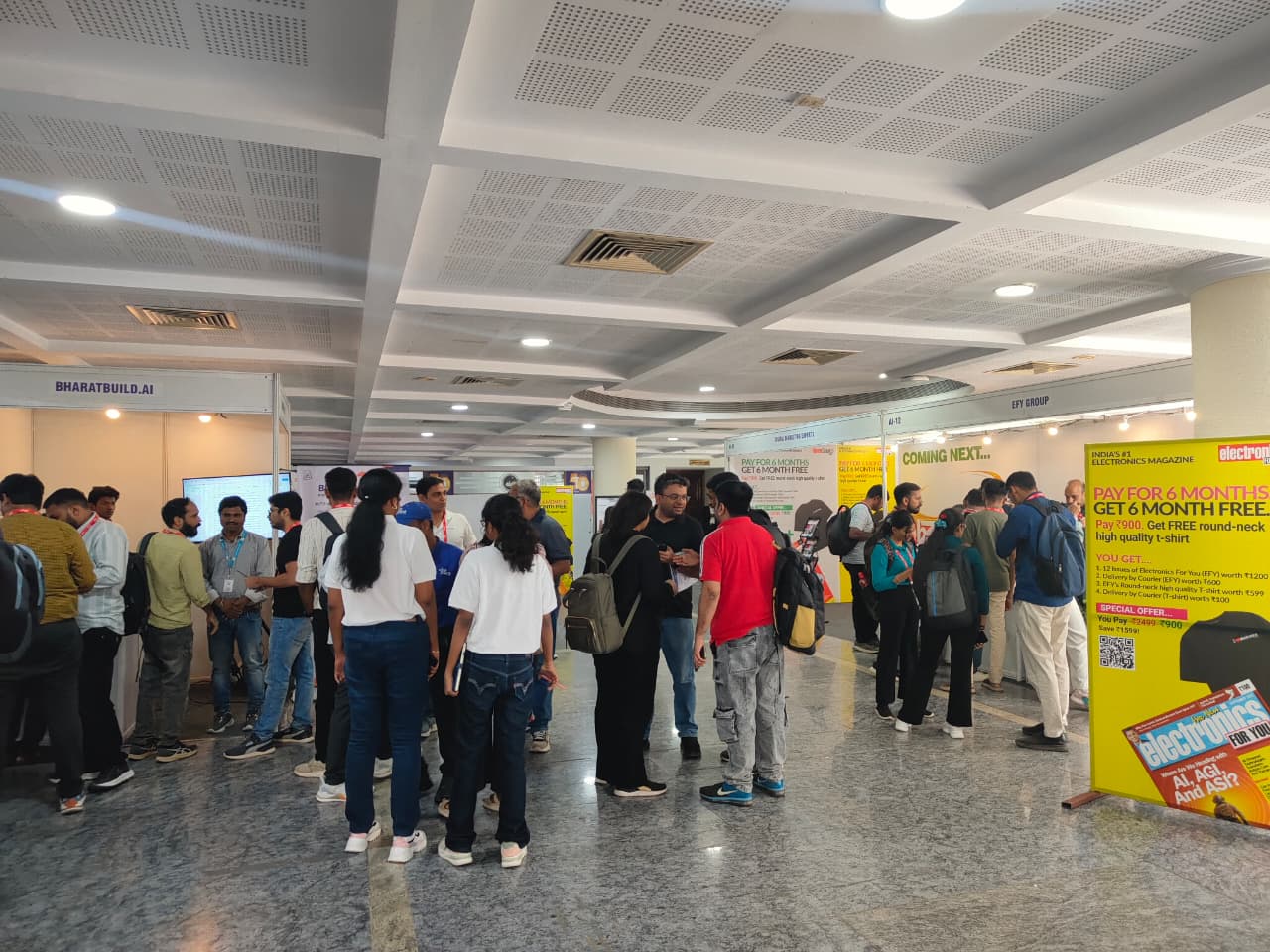
The workshops were the most useful part
Unlike the talks, the workshops involved actually building things. That difference matters more than it sounds — things didn't always work, and that itself was informative.
- Building voice AI agents
- Local ChatGPT using LLaMA and FastAPI
- Designing multi-agent systems
- Design patterns for AI systems
Working through these sessions made the gap between tutorial-land and real implementation visible. The friction is where the actual learning happens.
What people were actually talking about
The informal conversations were just as informative as the sessions. Most were pragmatic — not about capabilities, but about constraints.
- Handling production failures in AI systems
- Managing costs for LLM-based applications
- Improving response quality and consistency
- Integrating AI into existing, legacy systems
These conversations gave a clearer picture of where teams actually are — not where they plan to be, but the problems they are solving right now.
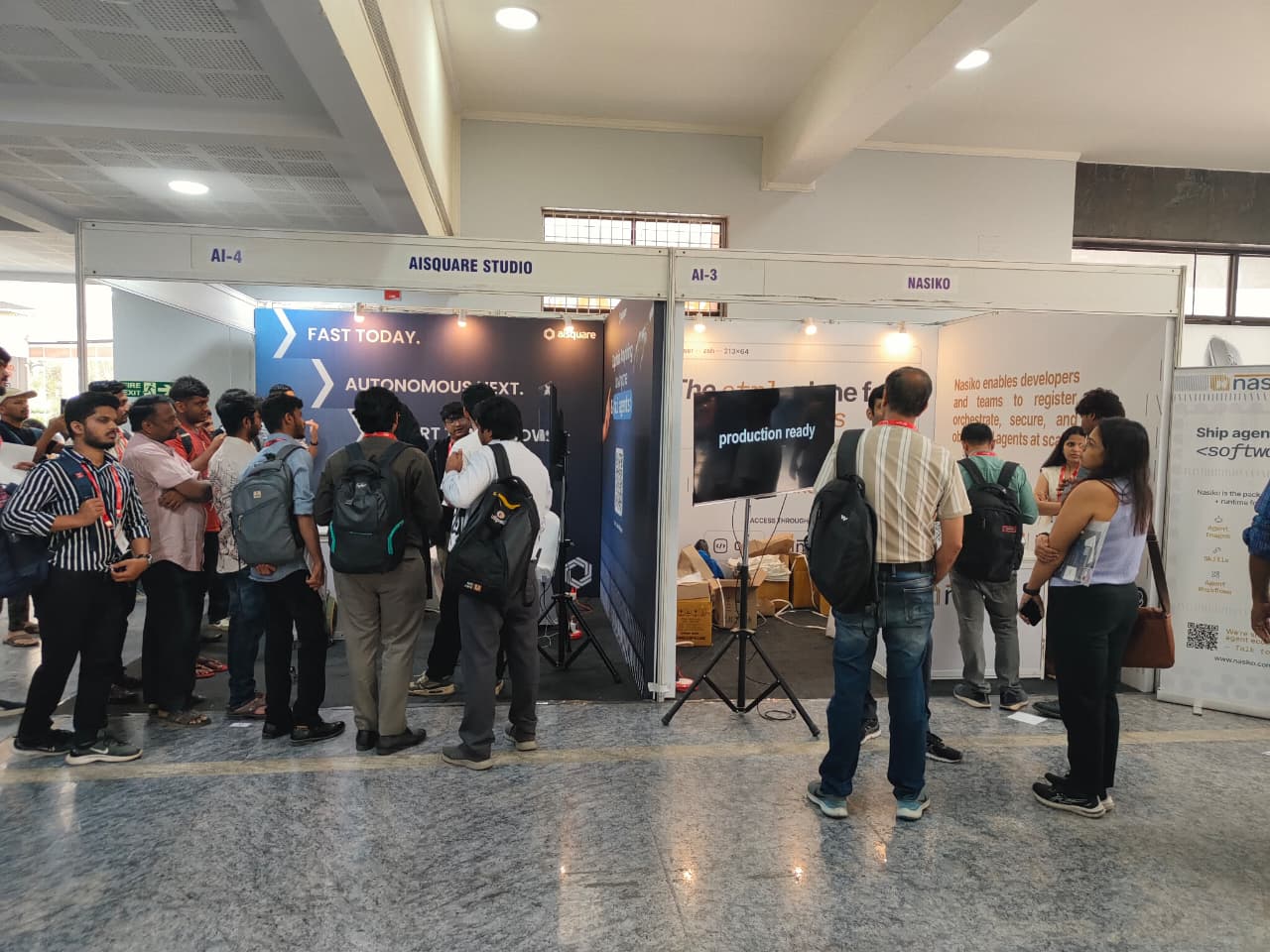
Systems thinking, not model thinking
Across almost every session, a consistent emphasis emerged. Speakers kept stepping back from models to talk about the systems that hold them.
- End-to-end workflows
- Integration with existing infra
- Monitoring and debugging
- Reliability over time
Model choice matters — but it's downstream of pipeline quality, data hygiene, and system design. That inversion was consistent throughout.
A clearer direction coming out
By the end of Day 2, I didn't feel overloaded. I felt like I had a sharper sense of where to focus next — which is a better outcome than collecting notes.
- Models
- APIs
- Basic implementations
- How systems are structured
- How they behave in production
- What happens after deployment
Worth attending — with the right expectations
Not every session was equally useful, and not everything was new. But the event gave a practical view of how AI is being used today — by teams dealing with real constraints, not ideal conditions.
If you're already learning AI and want to understand how things work beyond tutorials, events like this close a gap that online courses don't easily fill.
Build complete systems, not just models.
Work on real-world use cases. Learn deployment and scaling. That's where the interesting problems actually live.